Fentanyl is a potent synthetic opioid widely used in medical analgesia, but it also carries a high risk of abuse. Even minimal exposure—through powder, liquid, or aerosols—can result in serious health hazards, including respiratory depression, accidental overdose, or skin absorption. For healthcare workers, first responders, and law enforcement personnel, selecting the right protective gloves is critical to prevent occupational exposure and ensure workplace safety.
Glove Material Matters: Why Nitrile is the Best Choice
Nitrile gloves are the preferred option for fentanyl handling due to their superior chemical resistance and puncture protection. Unlike latex, nitrile carries a lower risk of allergic reactions, making it suitable for personnel with sensitive skin. Its dense polymer structure resists chemicals, tears, and punctures, providing an effective barrier against potent substances like fentanyl. Additionally, nitrile gloves maintain their integrity over prolonged use, making them reliable for extended operations in medical, laboratory, and law enforcement settings.
Certified Chemical Resistance: Assurance Through Standards
When selecting fentanyl-resistant gloves, it is essential to choose products certified to meet recognized chemical protection standards. Commonly referenced certifications include:
•ASTM (American Society for Testing and Materials): Demonstrates compliance with U.S. standards for chemical resistance, puncture strength, and barrier performance.
•EN (European Standard): Confirms protective performance under European chemical safety regulations.
Gloves meeting these standards ensure consistent protection against fentanyl and other hazardous substances, giving personnel confidence during high-risk operations.
Comfort and Dexterity: Protection Without Compromise
Effective gloves must not only provide protection but also allow precision and comfort. Fentanyl-resistant gloves should fit snugly while maintaining flexibility, enabling personnel to perform delicate tasks without interference. Proper fit and dexterity minimize operational errors and reduce the time of exposure, directly enhancing safety and efficiency in clinical, laboratory, or field environments.
Anti-Static Properties: Safety When Handling Powdered Fentanyl
Powdered fentanyl poses a particular risk of airborne contamination due to static electricity. Gloves with anti-static properties help minimize static build-up, reducing the likelihood of powder dispersion during handling. This feature is especially important in laboratories, hospitals, or law enforcement scenarios where precision and contamination control are critical.
Proper Use and Disposal: Maximizing Protection
Even the best gloves cannot provide full protection if not used correctly. Key safety practices include:
•Avoid direct skin contact when donning and doffing gloves.
•Replace gloves immediately if damaged or contaminated.
•Dispose of used gloves in sealed containers or garbage bags to prevent accidental exposure.
•Regularly inspect gloves for wear, cracks, or degradation, and replace them as needed.
•Maintaining glove integrity ensures continuous protection and reduces the risk of fentanyl exposure during repeated handling.
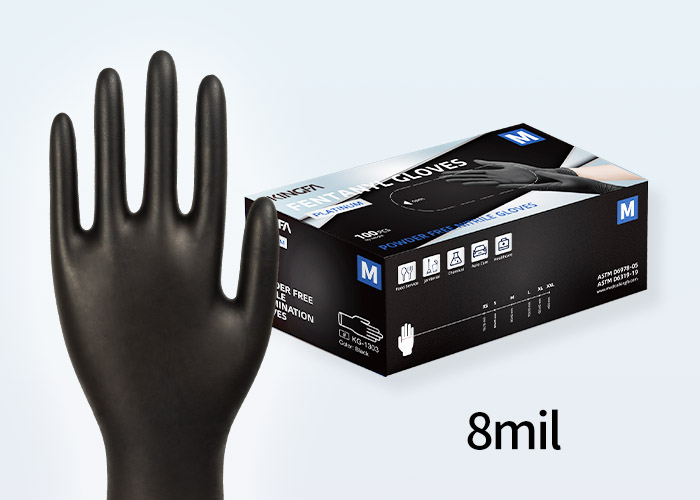
KINGFA Fentanyl-Resistant Nitrile Gloves KG-1303: Advanced Protection
The KINGFA KG-1303 Fentanyl-Resistant Nitrile Gloves are engineered for maximum safety. They are fentanyl-resistant and approved for use with multiple chemotherapy agents, offering robust break control and superior durability. Certified under both European and U.S. standards, these gloves provide reliable protection for healthcare workers, first responders, and law enforcement personnel. With KINGFA gloves, safety is not just a priority—it’s guaranteed.