
Machinery manufacturing is a demanding heavy‑industry environment characterized by high friction, heavy oil contamination, sharp metal edges, and continuous shift operations. It covers a wide range of work scenarios, including machining, precision assembly, equipment maintenance, workpiece transfer, and hardware grinding, as well as auto‑parts manufacturing. In daily workshop operations, workers are constantly exposed to metal burrs, cutting‑fluid splashes, lubricant residue, and workpiece slippage — along with risks of hand abrasions and lacerations. Ordinary disposable gloves cannot deliver the combination of grip stability, puncture resistance, and tactile dexterity that machinery‑related work demands.
Kingfa Medical’s diamond‑textured nitrile gloves are engineered for these high‑strength, high‑precision processing scenarios, providing standardized hand protection for modern machining workshops.
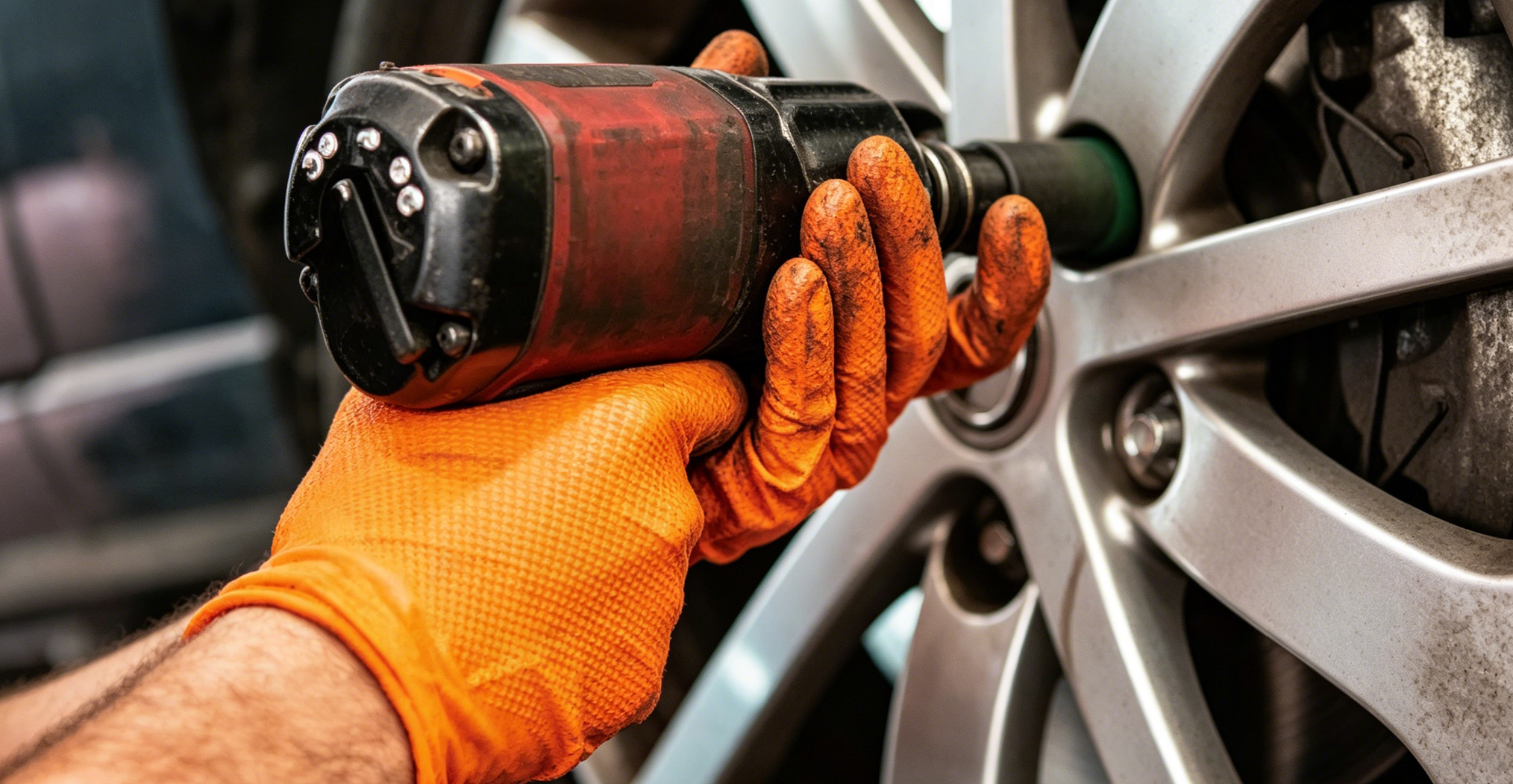
Real‑World Hand‑Protection Challenges in Machinery Manufacturing
- Slippage caused by machining oil and contaminants: Turning, milling and grinding generate cutting fluids, emulsions and machine‑tool lubricants that leave oil films on workpiece surfaces. Conventional smooth‑surface gloves offer minimal grip, so workpieces and hand tools can easily slip out of hands — causing workpiece collision damage and drop‑related safety hazards.
- Laceration risks from sharp metal edges and burrs: Castings, stampings and semi‑finished machined parts often feature burrs, sharp edges and metal chips. Thin‑gauge gloves are prone to cuts and punctures, resulting in hand lacerations and puncture wounds — one of the leading causes of occupational injuries in machine shops.
- Skin damage from industrial agents: Prolonged exposure to motor oil, hydraulic oil, rust preventatives and degreasing cleaners may trigger skin dryness, peeling, allergic reactions and contact dermatitis, endangering workers’ skin health.
- The trade‑off between protection and dexterity: Bulky traditional work gloves hinder fine tasks during precision assembly, while standard thin nitrile gloves deliver insufficient protection and tear easily, pushing up glove replacement costs.
- Limitations of latex gloves for factory‑wide use: Natural latex contains allergenic proteins. Long‑term wear may cause widespread skin allergies among the workforce, making latex gloves unsuitable for large‑scale standardized deployment.
Diamond‑Textured Nitrile Gloves: Key Advantages for Machinery Environments
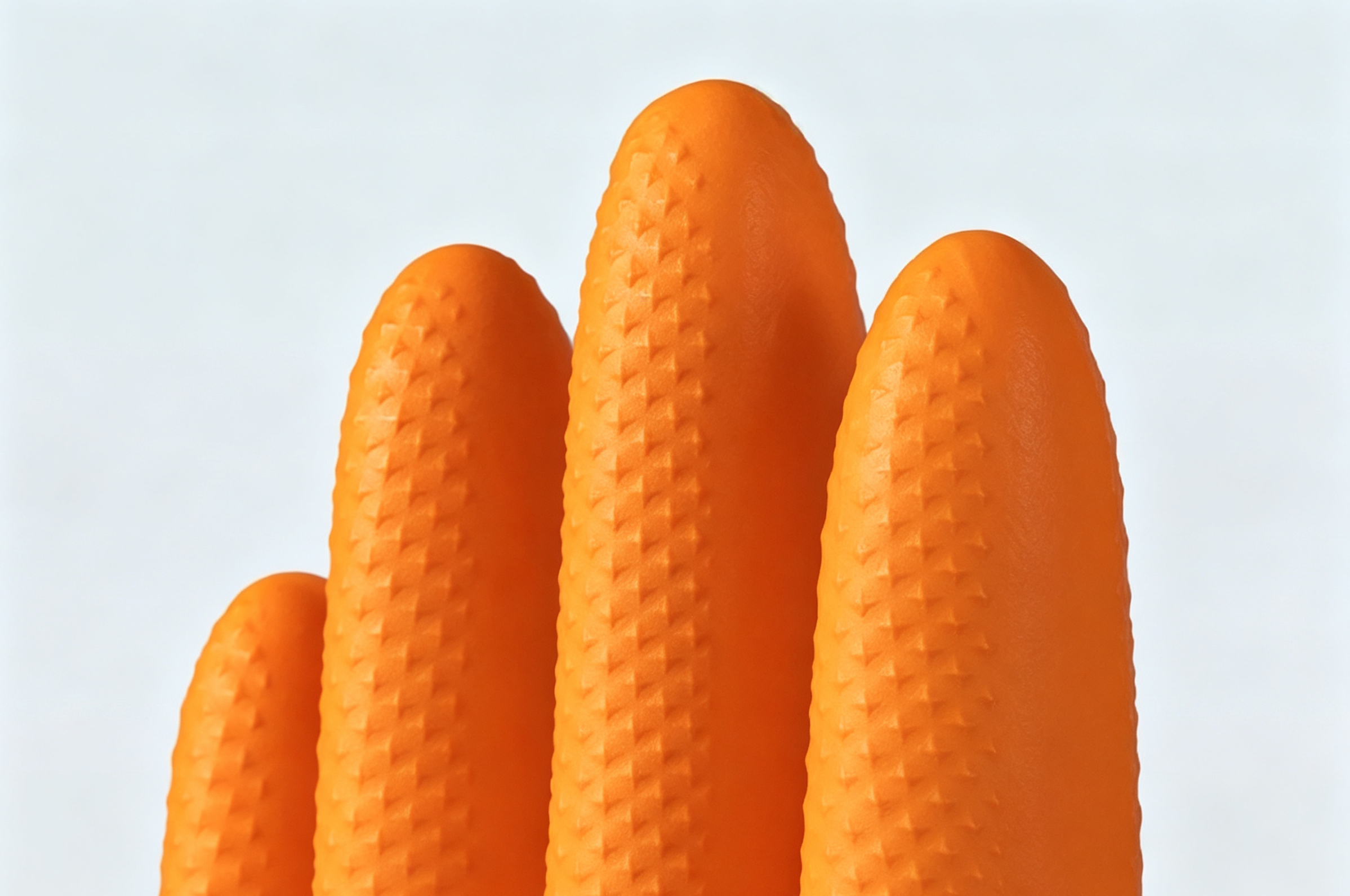
1. 3D Diamond‑Embossed Texture
High‑density 3D diamond embossing on the palm creates an interlocking anti‑slip pattern that delivers substantially higher friction than plain smooth‑surface gloves. Even under oily and wet conditions, the gloves maintain a secure grip on metal workpieces, wrenches and other hand tools, lowering risks of slips, drops and falling objects. The embossed pattern preserves fingertip tactile sensitivity, supporting both heavy‑tool handling and precision‑component assembly.
2. Reinforced Nitrile Base Material
These gloves are made from thickened industrial‑grade nitrile that boasts superior mechanical strength compared with standard disposable nitrile gloves. Engineered to resist workshop hazards such as metal burrs and abrasive contact, they withstand repeated friction and punctures from cast and forged workpieces, greatly reducing in‑use glove failures. Reinforced rolled cuffs stay firmly secured under strong pulling forces, making the gloves well‑suited for long, non‑stop workshop shifts.
3. Industrial‑Grade Chemical Resistance
Tested to GB 28881, EN ISO 374 Type B, and ASTM F739 standards, the gloves serve as an effective barrier against common workshop fluids including machine oils and mild industrial cleaners. They prevent chemical permeation and skin irritation and reduce the likelihood of occupational skin injuries. Being latex‑free and silicone‑free, they eliminate risks associated with latex‑protein allergies. Suitable for standardized workforce‑wide use, they help facilities satisfy workplace‑safety requirements.
Application Scenarios in Machinery Manufacturing
Precision Mechanical Assembly
Workstations for complete‑unit assembly, component fitting, bolt tightening and precision‑hardware work require excellent tactile feedback and fine motor control. The gloves fit snugly while retaining fingertip sensitivity, and the diamond embossing ensures a secure grip. Operators can reliably perform screw alignment, small‑part fitting and dimensional verification, preserving assembly accuracy and boosting production yield.
Machine‑Tool Processing & Auxiliary Operations
The gloves are ideal for supporting tasks on lathes, milling machines, grinders and machining centers, including semi‑finished‑part sorting, metal‑chip removal and workpiece transfer. The heavy‑duty nitrile substrate resists persistent abrasion from metal workpieces and chips, solving the high failure‑rate issue of ordinary thin gloves and holding up well under extended continuous use.
Equipment Maintenance & Tooling Servicing
Tasks such as machine‑tool servicing, equipment troubleshooting, fixture disassembly and reassembly, and mold cleaning frequently involve sharp‑edged metal components. The gloves offer outstanding cut and tear resistance, protecting hands against lacerations during service and repair work — perfect for high‑risk, demanding maintenance operations.
Auto‑Parts & Heavy‑Duty Hardware Manufacturing
During stamped auto‑component production, chassis‑part fabrication, and heavy‑hardware handling, workers grip heavy workpieces under high loads. The diamond anti‑slip texture stabilizes holds on heavy components, while the thickened material withstands intense friction and mechanical impact. The gloves are well‑adapted to the high‑stress conditions found in heavy‑industry and auto‑component production.
Reliable Hand Protection for Modern Manufacturing
As operational and safety standards within machinery manufacturing keep rising, Kingfa Medical’s diamond‑textured nitrile gloves resolve common drawbacks of conventional work gloves in terms of anti‑slip performance, wear resistance, oil resistance and tactile sensitivity. Without compromising operational efficiency, they help lower workshop‑injury risks and cut consumable waste, delivering standardized hand protection for manufacturing facilities. They are a preferred industrial‑safety glove choice for modern‑manufacturing operations.


