
Disposable protective gloves serve as essential supplies to ensure operational safety and reduce cross-contamination in settings such as medical care, food processing, laboratory work and industrial manufacturing. Based on whether powder is added, gloves are categorized into powdered and powder-free types. What is the difference between them? Why are powder-free nitrile gloves the preferred option across a growing number of industries? And how do you pick the right product for your needs?
1. What Are Powdered Gloves and Powder-Free Gloves?
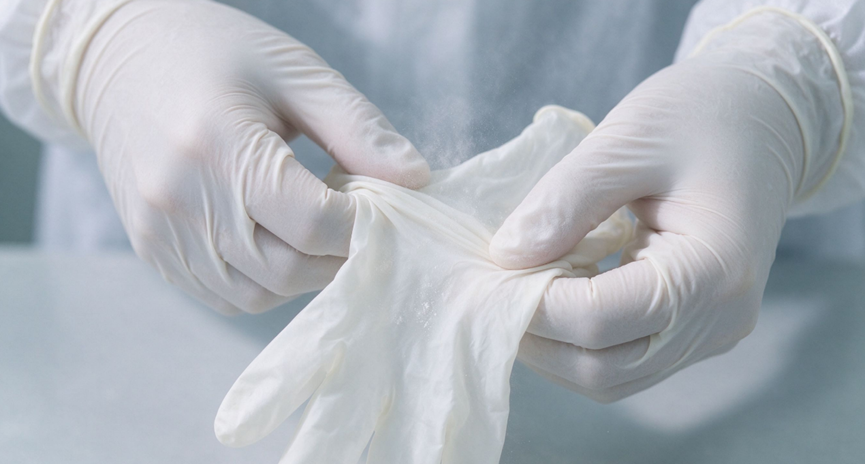
Powdered gloves are protective gloves with powder applied to their interior surface, most commonly cornstarch powder. The powder acts as a lubricant to reduce friction between the glove lining and skin, making the gloves easier to put on and take off. However, powder may shed and disperse during use, contaminating the working environment and raising health risks for some users.
Powder-free gloves do not rely on added powder for lubrication. Their easy-donning performance is achieved through chlorination treatment or polymer coating processes. Eliminating powder residue and dispersion, powder-free gloves are ideal for applications with stringent requirements for hygiene, cleanliness and operational safety.
2. What Is the Difference Between Powdered and Powder-Free Gloves?
Wearing Experience
Powdered gloves rely on powder to reduce friction for easy donning. Powder-free gloves adopt specialized surface treatment technologies. They keep good comfort and dexterity while eliminating powder residue.
Hygiene and Cleanliness
Powder can shed when powdered gloves are worn, handled or removed, introducing particulate contamination to products and workspaces. Without lubricating powder, powder-free gloves are well suited for high-cleanliness environments including food processing, precision electronics and laboratories.
Health Risks
Glove powder may cause skin irritation. For powdered natural latex gloves, powder can carry latex protein allergens and increase allergy risks. Powder-free gloves help cut down hazards linked to powder exposure.

3. Why Is Powder-Free Nitrile Glove a Better Choice?
Compared with traditional powdered gloves, powder-free nitrile gloves stand out in hygiene protection, material performance and user experience, bringing distinct advantages for many industries:
1、Prevent Powder Contamination for Clean Operations
Powder-free nitrile gloves avoid particulate shedding from donning lubricant powder, lowering contamination risks in food processing, lab testing and precision manufacturing.
2、Free of Natural Latex Protein to Reduce Allergy Risks
Nitrile material contains no natural latex proteins for users who need to avoid latex allergens. Combined with the powder-free design, it further reduces extra irritation and exposure risks from powder.
3、Tear and Abrasion Resistant for Reliable Barrier Protection
Nitrile features good wear resistance and tear strength, and provides resistance against many oils and chemicals. When manufactured to relevant standards, powder-free nitrile gloves deliver dependable barrier protection for medical examinations, laboratory tasks and industrial operations.
4、Snug Fit for High-Dexterity Work
High-quality powder-free nitrile gloves offer great elasticity and a close fit to reduce restriction during work. Some styles feature textured fingertips to improve grip stability, perfect for tasks requiring precise manipulation.


