
Field trials are an important part of agricultural scientific research. From crop growth monitoring and soil sample collection to plant pest and disease surveys, researchers frequently come into contact with soil, plant tissues, laboratory reagents and various agricultural materials.
Compared with indoor laboratories, the environment of field trials is more complex. Personnel are exposed not only to common contaminants such as soil, moisture and plant sap, but also to pesticide residues, fertilizers and other potentially irritating substances. Therefore, selecting appropriate protective gloves helps protect researchers’ hands, reduces the risk of sample contamination and improves the standardization of operations during field trials.
I. Why are protective gloves required for field trials?
Reduce risks from exposure to soil and microorganisms
Soil is one of the most frequently encountered materials in field trials and may contain bacteria, fungi and other microorganisms. During soil sampling, root observation and plant disease surveys, direct contact with these materials may raise the risk of skin irritation or infection if researchers have minor cuts or broken skin on their hands. Wearing gloves limits direct skin contact with external contaminants.
Lower exposure risks from agrochemicals
Field trials often involve agrochemicals including pesticides, fertilizers and plant growth regulators. Some chemicals may cause irritation or other health hazards via skin contact when being prepared, applied or sampled. Researchers shall select gloves with suitable chemical resistance according to the specific type, concentration and contact duration of the chemicals.
Prevent cross-contamination of test samples
When collecting soil samples, extracting plant tissues or conducting microbial tests across different test plots, residues on hands may be transferred to other samples and compromise test results. Using clean, suitable disposable gloves and changing them promptly between samples or test zones helps minimize cross-contamination.
Mitigate mechanical friction and exposure to plant irritants
Field trials require frequent handling of plant stems, leaves, branches, root systems and agricultural tools. Some plants have fine hairs, thorny structures or irritating sap on their surface, which may cause skin discomfort. Proper gloves reduce direct contact between skin and mild friction as well as certain irritants. For work involving thorny plants, sharp tools or obvious risks of cuts and punctures, gloves with corresponding mechanical protection performance shall be used.
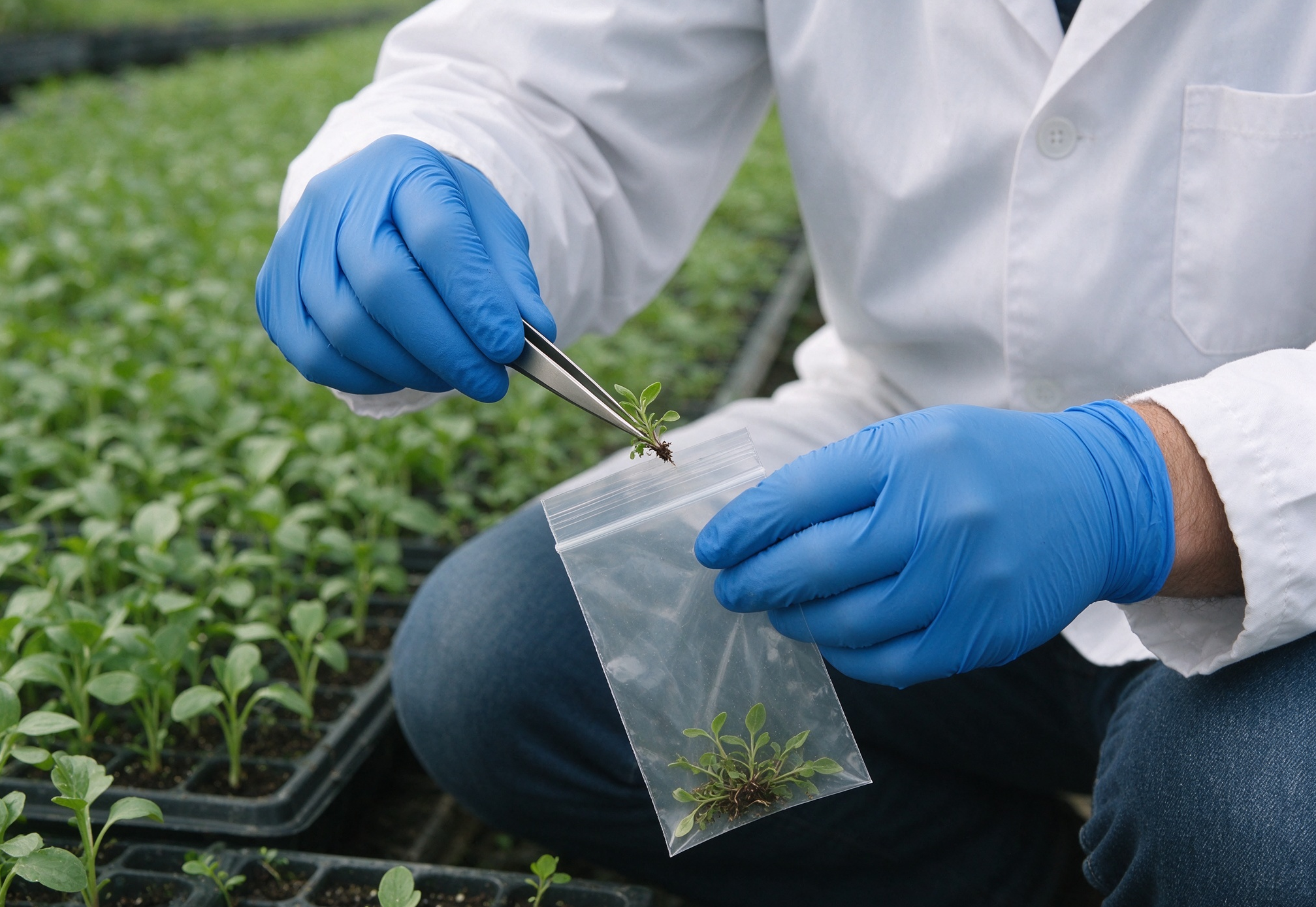
II. Requirements for protective gloves in field trials
Gloves suitable for field trials should be selected based on specific operations and test subjects:
Snug fit for operational dexterity
Finger dexterity is critical when collecting plant leaves, sorting seeds, labelling samples and operating small lab instruments. Well-fitted gloves avoid bunching or slacking, enabling researchers to perform delicate operations conveniently.
Adequate puncture and tear resistance
Field work may involve rough soil, plant branches and tool edges. Gloves should have physical properties matching the operational hazards to reduce unexpected breakage during routine work.
Balanced grip performance and wearing comfort
Field trials often involve wet soil, water-soaked utensils and small sampling equipment. Gloves with textured fingertips or other anti-slip designs improve grip under damp working conditions.
Chemical resistance matched to operational hazards
Field trials may expose users to pesticides, fertilizers, chemical reagents and other chemicals. Gloves with compatible chemical resistance should be chosen according to the type, concentration and exposure time of the contacted substances, to reduce the risk of chemical permeation and direct skin contact.


